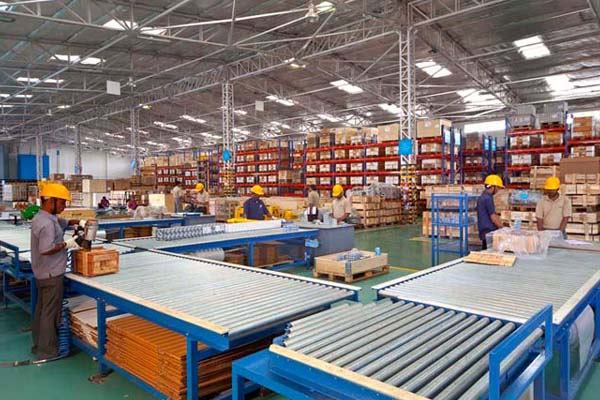
For a long time, warehousing was treated as a cost centre — a necessary place to hold inventory between production and delivery, with success measured mainly by how cheaply space could be rented. That view has shifted. Warehouses today are increasingly treated as active nodes in the supply chain, where inventory decisions, order fulfilment speed, and distribution efficiency are actively managed rather than passively stored.
From storage to distribution hub
The clearest shift is the rise of warehouses designed around throughput rather than just capacity — laid out to move goods in, sort them, and move them back out quickly, rather than simply stacking pallets until needed. This matters most for businesses with e-commerce or fast-moving consumer goods components, where the time inventory sits idle directly affects working capital and customer delivery speed.
Location strategy is changing
Warehousing decisions increasingly follow demand patterns rather than just real estate cost. A network of smaller, well-placed regional warehouses near consumption centres often outperforms one large, centrally located facility, because it shortens last-mile delivery distances — a meaningful factor as customer expectations around delivery speed continue to rise across urban and increasingly tier-2 Indian markets.
Inventory visibility as a baseline expectation
Systematic inventory management — knowing exactly what stock exists, where, and in what condition, without a physical count — has moved from a nice-to-have to a baseline expectation. Businesses relying on warehouse partners who can't provide reliable, current stock visibility are increasingly finding that gap directly costs them in stockouts, overstocking, or fulfilment delays.
Value-added services are the differentiator
Beyond storage, warehouses that offer packaging, labelling, sorting, and consolidation services let businesses shift more of their supply chain complexity onto their logistics partner, freeing up their own operations to focus elsewhere. This is often the difference between a warehouse that's simply a storage cost and one that meaningfully improves how efficiently a business runs. At Sangharsh India Logistics, this is the direction our warehousing and distribution services have moved — building facilities and processes designed around getting goods to market efficiently, not just holding them until someone asks for them.