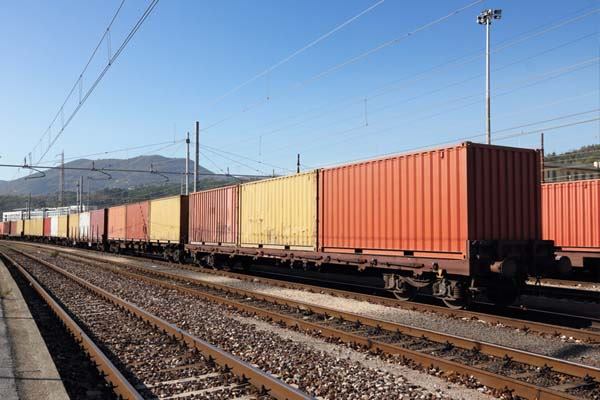
For years, road transport was the default for most Indian businesses, largely because it was the most flexible option available. That's shifting. As India's rail freight infrastructure — including the Dedicated Freight Corridors — has matured, multimodal transport combining rail's long-haul efficiency with road's last-mile flexibility has become the more practical choice for a growing share of industrial cargo.
Why rail changes the economics
Rail's biggest advantage is scale. A single freight rake can carry the equivalent of dozens of trucks in one movement, which meaningfully lowers the per-tonne cost on long-distance routes, particularly for bulk commodities like steel, cement, coal, and containerised cargo moving 700km or more. It's also markedly more fuel-efficient per tonne-kilometre than road transport, which matters both for cost and for a company's environmental footprint.
Where multimodal fits in
Rail alone rarely gets cargo door-to-door — most origins and destinations aren't directly rail-connected. Multimodal transport solves this by using road transport for the first and last mile, and rail for the long-distance trunk haul. Managed well, a shipment can move from a factory floor in one state to a rail terminal, travel most of the distance by rail, then complete the final stretch by road — combining rail's cost efficiency with road's reach.
Practical considerations
Multimodal transport suits planned, higher-volume shipments better than urgent, last-minute ones, since rail schedules are fixed and require lead time to book capacity. It also requires more coordination — matching truck availability at both ends with rail departure and arrival windows — which is where a logistics partner with an established rail-road network earns its value. Handled by an inexperienced operator, the coordination gaps between modes can erase the cost savings entirely.
What we're seeing on the ground
Across our Eastern India operations, industries like steel, coal, and heavy engineering have been steadily shifting bulk, non-urgent freight from all-road to rail-multimodal routes over the past several years, largely driven by cost pressure and by improving rail infrastructure connecting industrial belts to major ports and consumption centres. For businesses moving large, regular volumes over long distances, it's increasingly the more sensible default rather than the alternative option.