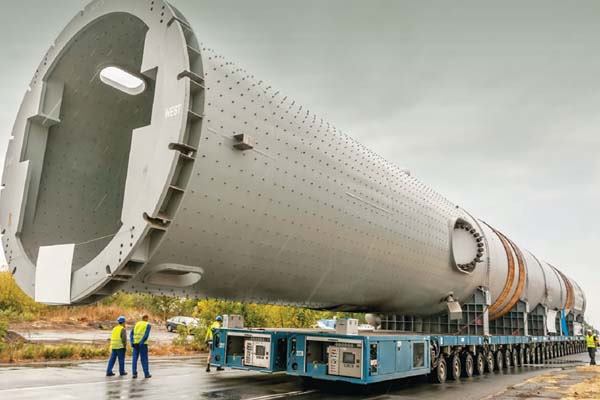
Project logistics covers a category of freight that standard trucking simply isn't built for: heavy machinery, industrial equipment, wind turbine components, boilers, transformers, and other over-dimensional cargo that requires specialised planning from the first stage. It's less a transportation service and more an engineering exercise that happens to end with cargo arriving at a site.
Why it's a different discipline
A standard shipment mostly needs a vehicle and a route. Project cargo needs a route survey to confirm that bridges, overpasses, and turns can physically accommodate the load's dimensions and weight; the right specialised vehicle — low-bed trailers, multi-axle configurations, or hydraulic modular trailers depending on the cargo; and often, coordination with local authorities for permits, escorts, or temporary infrastructure adjustments like removing a road sign or reinforcing a culvert.
The planning sequence
A project logistics job typically starts weeks or months before the cargo moves. It begins with understanding the exact dimensions, weight, and centre of gravity of the equipment, followed by a route survey covering every bridge, turn, and clearance along the path. Only once that's confirmed does vehicle selection, permit applications, and scheduling begin. Skipping or rushing any of these steps is where project cargo moves go wrong — a load that can't clear a bridge discovered mid-transit is a far more expensive problem than one caught in planning.
Handling and loading
Oversized cargo often requires cranes or hydraulic jacking systems for loading and unloading, and securing methods engineered specifically for that load's weight distribution rather than standard tie-downs. Getting this wrong risks damage to equipment that can cost far more than the freight itself, or worse, a safety incident during transit.
What makes a project logistics partner reliable
Track record matters more here than in almost any other freight category. A partner needs demonstrated experience with route surveys, the right equipment on hand or accessible through a reliable network, and the administrative capability to manage permits and approvals without delaying the project. At Sangharsh India Logistics, our project logistics work spans infrastructure, power, and heavy engineering clients who need cargo that can't move by conventional means handled with the same reliability as a standard shipment — just with considerably more planning behind it.